
THE SEOS.CO LEARNING LAB ★ FIND YOUR NEXT AHA
LEARN SEO.
CONNECT THE DOTS.
Build the foundations. Explore a specialty. Put what you learn to work.

To learn SEO, start with how a search engine discovers and understands a page, then practice matching a useful answer to a real searcher’s need. Connect that answer to related material, make the page easy to use, and measure whether visitors complete a meaningful task. You do not need to master every specialty before making your first useful improvement.
This library separates the concepts you need to understand from the actions you need to take. Choose a learning route below, explore a topic, and use its definition, practical guide, checklist and troubleshooting pages in sequence. When you already know the problem and want an implementation workflow, visit the How-To workshop. For platform developments and technical investigations, visit the SEOS.co blog.
PICK YOUR STARTING LINE.
Start from the beginning
Build a foundation before collecting tactics.
Find your growth constraint
Diagnose the constraint behind a page’s performance.
Build for a different search journey
Choose the specialty that fits your audience and business.
ELEVEN TOPICS. A WORLD OF USEFUL ANSWERS.
Choose the subject closest to your next decision. Each topic connects explanations, practical guides, checklists and troubleshooting.

SEO foundations
Understand search, intent, strategy and the purpose of a useful page.
Technical SEO
Explore crawling, indexing, canonicals, rendering and site performance.

Content & keywords
Turn real questions into useful answers and connected content.

Links & authority
Study relevant links, digital PR and credible supporting evidence.
AI search, AEO & GEO
Build clear answers and distinguish citations from recommendations.
Ecommerce SEO
Make products, categories and shopping decisions easier to understand.
Enterprise, SaaS & B2B
Coordinate search work across complex sites, teams and buying journeys.

International SEO
Plan language, market and regional content architecture.
Audits & measurement
Diagnose changes and connect observations to useful decisions.
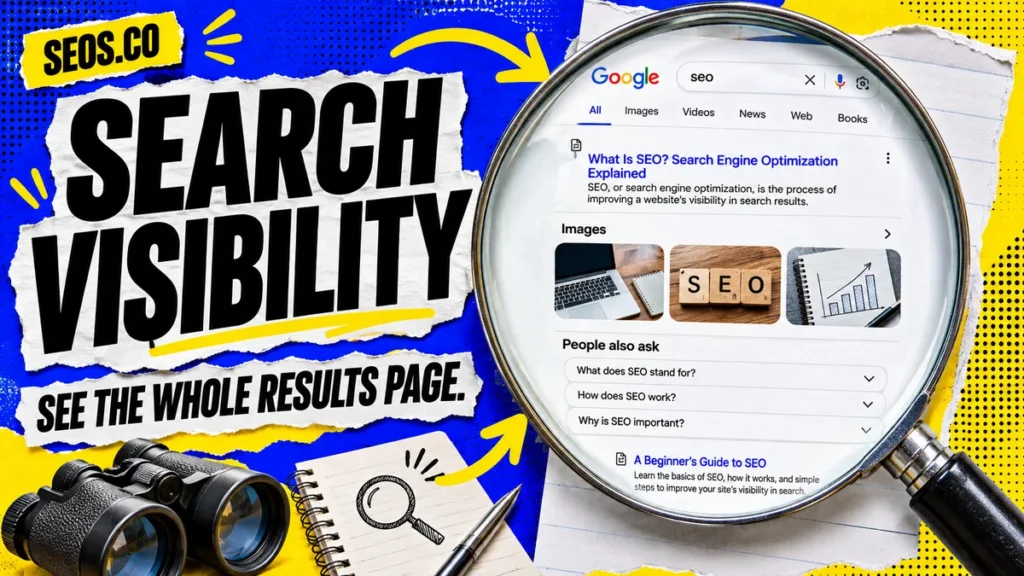
Search visibility
Understand the different surfaces where answers and brands appear.
A SEQUENCE YOU CAN ACTUALLY FOLLOW.
Learn SEO one decision at a time. Open a stage to understand the idea, then choose a related topic and practice on a real page.

A search engine must be able to discover a URL and retrieve its content before that content can be considered for search. Indexing is another stage, and ranking for a particular question is another. A successful visit adds a further requirement: the page must help the person who arrives. These stages are related, but a passing check at one stage does not establish success at the next.
Imagine a helpful guide that has no incoming links. The answer may be excellent, yet discovery is weak. Now imagine a well-linked page that returns an error or points its canonical signal elsewhere. Adding more paragraphs may leave the actual problem untouched. Finally, imagine a technically healthy page that answers a different question from the one a visitor asked. Its technical health does not resolve the mismatch.
As you learn SEO, build the habit of naming the stage you are investigating. Ask whether the evidence concerns discovery, retrieval, indexing, relevance, presentation or visitor outcomes. This vocabulary makes reports clearer and prevents one metric from carrying more meaning than it supports. The fundamentals library gives you the concepts; the technical library helps you investigate specific failures.
Keyword research is useful when it reveals what someone needs, how they describe that need, and what information would help them choose a next step. A list of phrases alone does not tell you whether to create a tutorial, comparison, service page, product page or definition. Read the wording and context together. A person asking what something means usually needs a different opening from someone comparing providers.
Write the intended answer before outlining the rest of the page. For a tutorial, identify the starting conditions, steps, expected output and common failures. For a comparison, identify the decision criteria and explain meaningful tradeoffs. For a definition, explain the concept plainly, show an example and distinguish it from nearby ideas. These choices determine the structure more reliably than a fixed word count or heading template.
Check whether an existing page already serves the same need. Closely related phrases can often belong on one strong page; distinct decisions may justify separate pages linked together. As you learn SEO, practice explaining why each proposed URL deserves to exist. The answer should describe a reader’s task, not merely a different spelling of a keyword.
A useful page does more than restate a definition. It supplies the conditions under which advice applies, the evidence a reader should collect, and the decision that follows. Replace vague instructions such as improve content with concrete questions: which part is missing, what information would resolve the reader’s uncertainty, and how will you check the revised page?
Consider a guide to declining organic traffic. A generic explanation lists possible causes. A stronger guide distinguishes a tracking change from a search visibility change, separates affected pages and periods, and explains which observation would support each hypothesis. It can include an example investigation without inventing a successful result. That extra reasoning is useful information even when no original numerical study is available.
Use headings to expose the reasoning, not to repeat the same phrase in slightly different forms. Put a direct answer near the start of the relevant section, then add examples, exceptions and supporting sources. Use meaningful emphasis where it helps someone scan a decision. A table is valuable when it compares genuine alternatives; a chart needs real data or a clearly identified illustrative model.
Internal links help people move from a broad question to a narrower answer and back again. A topic hub should explain what a subject includes, suggest a sensible starting point and connect to the most relevant child pages. A child guide should provide useful context and point to the next question when that question naturally follows from the explanation.
Think of a technical SEO sequence: understand indexing, investigate why a page is excluded, inspect canonical signals, then verify the delivered result. Links should reflect that sequence. Sending every page to every other page creates noise. Sending readers only to the homepage makes them restart their investigation. A contextual link should have a reason that is visible in the sentence around it.
When you learn SEO through this library, choose a concept page first and follow the related practical resource. Return to the topic hub when you need a different branch. The complete index remains available for exact lookups, but you should not have to scan hundreds of titles to find the next useful step. Clear labels and a manageable number of choices are part of search-friendly architecture.
An editor preview is only one view of a page. Verify the published URL, its response and the content delivered to an ordinary visitor. Look for missing sections, broken images, unexpected redirects, conflicting canonical signals and controls that prevent indexing. If important content depends on JavaScript, compare what is initially delivered with what becomes available after rendering.
On mobile, read the actual text and use the controls. Check whether headings fit, tables can be understood, links are easy to select and images communicate their intended meaning. A page can contain all the right information while making it unnecessarily difficult to use. Improving that experience is useful independently of any particular ranking outcome.
Keep performance evidence specific. A laboratory test helps diagnose loading and interaction problems under its test conditions; field measurements describe observed visitor experiences when enough data exists. Do not confuse a single score with a complete assessment. Record the device, page and test conditions so a later comparison is meaningful. The technical SEO library connects these checks to deeper explanations.
Before making an edit, save a baseline appropriate to the question. For search visibility, record the relevant pages, query groups and comparison periods. For a visitor task, confirm that the intended event is measured and that it represents a real completion. A button click, form submission and qualified inquiry are different observations and should be named separately.
After publishing, first verify that the change is live. Then check whether search engines have had an opportunity to revisit the page before interpreting later performance. Traffic can also change because of seasonality, demand, competitors, tracking changes or unrelated site work. A before-and-after chart is a useful observation, but it does not automatically establish causation.
To learn SEO efficiently, maintain a small change log: the problem, evidence, intervention, deployment date, acceptance checks and later review. This turns individual edits into a learning process. If the expected result does not appear, revisit the diagnosis instead of adding more changes simply to create activity. The measurement library helps you connect reporting to decisions.
YOUR ROUTE, EXPLAINED.
Start from the beginning
If you are new to search, learn SEO by following one page from discovery to a completed visitor task. First understand crawling, indexing and search intent. Then choose a question you can answer accurately, create a useful page and connect it to the rest of your site. Leave complicated tools and automation until you can explain what evidence each one provides.
Your first deliverable is a short page brief: who needs the page, what they are trying to accomplish, which answer belongs near the beginning, and what they should do next. This prevents an easy beginner mistake: optimizing isolated words without deciding whether the page serves the right purpose. Study fundamentals, content and measurement in that order.
Find your growth constraint
If you already publish regularly, begin with the gap between what you expect and what you can observe. A page missing from search needs a different investigation from a page that receives impressions but few qualified visits. A page attracting visitors who immediately leave may have an intent or usability problem even when its technical settings look correct.
Choose one important page and write a testable problem statement. Record its response, indexability, search queries, incoming links and intended conversion. Learn SEO through the specialty that addresses that evidence, rather than applying a universal checklist indiscriminately. Technical SEO, content, authority and measurement become more useful when each has a specific job.
Build for a different search journey
Local services, product catalogs, international sites and AI-assisted research introduce different decisions. A local customer needs accurate service and location information. A shopper needs comparable product details. An international visitor needs the right market and language. An AI-generated answer needs accessible, clear material that supports the point being discussed.
Start with the business model, then choose the specialist route. Keep the foundations: useful content, consistent facts, understandable architecture and working pages. Treat an appearance in an answer, a source citation, a website visit and a completed inquiry as separate outcomes. Learning the difference helps you avoid reporting activity as proof of commercial success.
ONE PAGE. ONE CLEARER CUSTOMER DECISION.
Suppose you manage a local repair business and want to improve a service page. Begin by defining the customer’s decision: whether you handle the particular repair, serve their area and offer an appropriate way to request help. Collect the existing page, relevant search queries, business facts and the information your team repeatedly explains to callers. These are inputs to the exercise, not evidence that a ranking improvement is guaranteed.
Next, compare the page with that decision. If service limitations are unclear, explain them. If the page names several locations without explaining availability, provide accurate coverage details. If the main answer is buried beneath generic promotional text, move the useful explanation earlier. Link to an appropriate supporting guide when a customer needs more detail, and keep the inquiry route easy to use.
Then verify the published page on a phone. Confirm that the business facts match your current operation, the contact route works and the important content is accessible. Record the changes and monitor the relevant search and inquiry measures separately. The lesson is the sequence: identify the task, locate the information gap, make a specific improvement, verify delivery and review later evidence. You can apply that sequence as you learn SEO for other business models.
WHERE AI SEARCH FITS.
AI-assisted search changes how an answer may be assembled and presented, but it does not remove the need for clear, supportable information. Write passages that make sense in context and retain important conditions when quoted or summarized. Identify the entity being discussed, explain what a claim means and link to sources that actually support it. Avoid treating a citation as proof that the entire answer is accurate.
When evaluating your own visibility, record the question, platform, date and whether browsing or search was available. Distinguish a mention of your organization from a citation to your website and from a recommendation to choose your service. Repeated observations can help reveal patterns, but they remain observations under particular conditions. The AI search library explores answer design and measurement alongside the traditional foundations.
FIND THE GUIDE FOR YOUR NEXT STEP.
Choose the problem you want to solve, then pick your depth. Start here explains the idea; Put it into practice helps you take action; Check and troubleshoot helps you review the result. New to SEO? Begin with SEO foundations and the curriculum above.

Understand search and plan your first improvements.
Explore the SEO foundations learning path →
Start here
- What Is the Best SEO Strategy for Multi-Location Businesses?
- What Is Programmatic SEO? Strategy, Examples and Implementation Guide
- What Is AI SEO and How Is It Different From Traditional SEO?
- What Is Information Gain in SEO?
- What Is Entity Optimization for SEO?
- SEO vs AEO vs GEO: What Is the Difference?
- What Is the Best Website Structure for SEO?
- How Does Reputation SEO Work?
- How Does SEO for Established Websites Work?
- How Does SEO For New Websites Work?
- How Does Faceted Navigation SEO Work?
- How Does Pagination SEO Work?
- How Does SEO Automation Work?
- How Do SEO Tools Work? A Practical Guide to Data, Diagnosis and Results
- How Does In-house SEO Work? Team Models, Workflows and KPIs
- How Does SEO Pricing Work?
- How Do SEO Consultants Work?
- How Does SEO ROI Work? A Practical Guide to Measurement and Forecasting
- How Does SEO Agency Selection Work?
- How Does SEO Forecasting Work?
- How Does Conversion Rate Optimization For SEO Work?
- How Do SEO KPIs Work? A Practical Measurement Guide
- How Does SEO Reporting Work? A Practical Guide
- How Does Site Redesign SEO Work?
- How Do SEO Migrations Work? A Complete Planning and Recovery Guide
- How Do SEO Audits Work? A Complete Diagnostic Guide
- How Does Digital PR for SEO Work?
- How Does Video SEO Work?
- How Does Image SEO Work?
- How Does Mobile SEO Work?
- How Does JavaScript SEO Work?
- How Do Pillar Pages Work? A Practical Guide to Topic Clusters
- How Do Topic Clusters Work? A Practical SEO Guide
- How Does Site Architecture Work?
- How Does SEO Content Optimization Work?
- How Does Search Intent Work? A Practical SEO Guide
- How Does Semantic SEO Work?
- How Does Entity SEO Work?
- How Does Perplexity SEO Work?
- How Does ChatGPT SEO Work?
- How Does AI SEO Work? A Practical Guide to Rankings, Citations and AI Visibility
- How Does Multi-location SEO Work?
- How Does Franchise SEO Work?
- How Does B2B SEO Work?
- How Does SaaS SEO Work?
- How Does Shopify SEO Work?
- How Does WordPress SEO Work?
- How Does Programmatic SEO Work?
- How Does Multilingual SEO Work?
- How Does International SEO Work?
- How Does Ecommerce SEO Work?
- How Does Content SEO Work?
- How Does Off-page SEO Work?
- How Does On-page SEO Work? A Practical 2026 Guide
- How Does Enterprise SEO Work?
- How Does Technical SEO Work?
- How Does Local SEO Work?
- How Does National SEO Work?
- How Does SEO Work? A Complete Guide to Search Visibility
- Enterprise SEO vs Traditional SEO: What Is Different?
- What Is the Best SEO Strategy for a Website Redesign?
- What Is a Good SEO ROI? Benchmarks, Formula and Decision Rules
- What Are SEO Tools? A Complete Guide to SEO Software
- What Is Reputation SEO? Complete Guide
- What Is SEO for Established Websites? Complete Guide
- What Is SEO for New Websites? Complete Guide
- What Is Pagination SEO? Complete Guide
- What Is Faceted Navigation SEO? Complete Guide
- What Is SEO Automation? Complete Guide
- What Is an SEO Consultant? Complete Guide
- What Is In-house SEO? Complete Guide
- What Is SEO Agency Selection? Complete Guide
- What Is SEO ROI? Complete Guide
- What Is SEO Pricing? Complete Guide
- What Is SEO Forecasting? Complete Guide
- What Is SEO Reporting? Complete Guide
- What Are SEO KPIs? Complete Guide
- What Is Conversion Rate Optimization for SEO? Complete Guide
- What Is an SEO Audit? Complete Guide for 2026
- What Is SEO Migration? Complete Guide for 2026
- What Is Site Redesign SEO? Complete Guide
- What Is Digital PR for SEO? Complete Guide
- What Is Mobile SEO? Complete Guide
- What Is Video SEO? Complete Guide
- What Is Image SEO? Complete Guide
- What Is JavaScript SEO? Complete Guide
- What Is Site Architecture? Complete Guide
- What Are Topic Clusters? Complete Guide
- What Are Pillar Pages? Complete Guide
- What Is SEO Content Optimization? Complete Guide
- What Is Search Intent? Complete Guide
- What Is Semantic SEO? Complete Guide
- What Is Entity SEO? Complete Guide
- What Is AI SEO? Complete Guide
- What Is Perplexity SEO? Complete Guide
- What Is ChatGPT SEO? Complete Guide
- What Is Franchise SEO? Complete Guide
- What Is Multi-location SEO? Complete Guide
- What Is SaaS SEO? Complete Guide
- What Is Enterprise SEO? Complete Guide
- What Is B2B SEO? Complete Guide
- What Is International SEO? Complete Guide
- What Is Local SEO? Complete Guide
- What Is Off-page SEO? Complete Guide
- What Is Shopify SEO? Complete Guide
- What Is National SEO? Complete Guide
- What Is WordPress SEO? Complete Guide
- What Is Programmatic SEO? Complete Guide
- What Is Multilingual SEO? Complete Guide
- What Is Content SEO? Complete Guide
- What Is Ecommerce SEO? Complete Guide
- What Is SEO? Complete Guide
- What Is On-page SEO? Complete Guide
- What Is Technical SEO? Complete Guide
Put it into practice
- How to Improve Reputation SEO
- Reputation SEO Best Practices: A 2026 Guide
- SEO for Established Websites: Best Practices for Sustainable Growth
- How to Improve SEO for a New Website
- SEO for New Websites: Best Practices for Faster Discovery, Rankings and Growth
- How to Improve SEO for Established Websites
- Faceted Navigation SEO Best Practices
- How to Improve Faceted Navigation SEO
- Pagination SEO Best Practices
- How to Improve Pagination SEO
- SEO Automation Best Practices: A Practical Guide to Safe, Scalable Growth
- How to Improve SEO Automation Without Sacrificing Quality
- SEO Tools Best Practices: Build a Stack That Produces Decisions
- How to Improve SEO Tools: A Practical System for Better Data, Decisions and Results
- In-house SEO Best Practices: Operating Model, Team and Measurement
- How to Improve In-house SEO: A Practical Operating Guide
- SEO Consultants Best Practices
- How to Improve SEO Consultants: A Practical Performance Guide
- How to Improve SEO ROI: Measurement, Diagnosis and Growth
- SEO ROI Best Practices
- SEO Agency Selection Best Practices
- How to Improve SEO Forecasting
- How to Improve SEO Agency Selection
- How to Improve Conversion Rate Optimization for SEO
- Conversion Rate Optimization For SEO Best Practices
- SEO Forecasting Best Practices: Models, Scenarios and Validation
- SEO Pricing Best Practices: Costs, Models and ROI
- How to Improve SEO Pricing: A Value Based Guide for Agencies and Buyers
- How to Improve SEO KPIs: A Practical Measurement and Growth Guide
- SEO KPIs Best Practices: What to Measure, Diagnose and Report
- SEO Migrations Best Practices: A Complete Planning, Launch and Recovery Guide
- How to Improve SEO Reporting: Metrics, Diagnostics and Action Plans
- SEO Reporting Best Practices: Metrics, Models and Actionable Reports
- Site Redesign SEO Best Practices
- How to Improve Site Redesign SEO Without Losing Organic Visibility
- How to Improve SEO Migrations: A Technical Playbook for Protecting Traffic
- SEO Audits Best Practices: A Diagnostic and Prioritization Guide
- How to Improve SEO Audits: From Error Lists to Actionable Growth Plans
- How to Improve Digital PR for SEO
- Digital PR for SEO Best Practices: How to Earn Links, Citations and Search Visibility
- How to Improve Video SEO: A Practical Guide for YouTube, Google and AI Search
- Video SEO Best Practices: A Complete Guide to YouTube, Google and AI Search
- Image SEO Best Practices: A Complete Optimization Guide
- How to Improve Image SEO: A Practical Guide
- How to Improve Mobile SEO
- Mobile SEO Best Practices: A Practical Guide for 2026
- JavaScript SEO Best Practices: Rendering, Indexing and Auditing
- How to Improve JavaScript SEO
- How to Improve Pillar Pages for Search, Users and AI Answers
- Pillar Pages Best Practices: How to Build a Topic Hub That Ranks
- Topic Clusters Best Practices
- How to Improve Topic Clusters: A Practical SEO and AI Search Guide
- How to Improve Site Architecture
- Site Architecture Best Practices: A Practical SEO Guide
- SEO Content Optimization Best Practices: A Practical Guide for Search and AI Visibility
- How to Improve SEO Content Optimization
- Search Intent Best Practices
- How to Improve Search Intent
- Semantic SEO Best Practices
- How to Improve Semantic SEO
- Entity SEO Best Practices: Build a Clear, Connected Brand
- How to Improve Entity SEO: A Practical Guide
- Perplexity SEO Best Practices: How to Earn Citations and Visibility
- How to Improve Perplexity SEO: A Practical Citation and Visibility Guide
- ChatGPT SEO Best Practices: How to Earn Citations and Recommendations
- How to Improve ChatGPT SEO: A Practical Visibility Guide
- AI SEO Best Practices: A Practical Guide to Search and AI Visibility
- How to Improve AI SEO: A Practical Guide to Visibility, Citations and Conversions
- SaaS SEO Best Practices: Build Organic Growth That Reaches Revenue
- Multi-location SEO Best Practices: A Scalable Guide for Every Branch
- How to Improve Multi-location SEO
- How to Improve Franchise SEO
- Franchise SEO Best Practices: A Scalable System for National and Local Growth
- How to Improve B2B SEO
- B2B SEO Best Practices: A Practical 2026 Strategy Guide
- WordPress SEO Best Practices: A Practical Guide for 2026
- How to Improve SaaS SEO: A Revenue-Focused Guide
- How to Improve Shopify SEO: A Practical 2026 Guide
- Shopify SEO Best Practices: The Complete 2026 Guide
- How to Improve WordPress SEO: A Practical Guide for 2026
- Programmatic SEO Best Practices: Building Valuable Pages at Scale
- How to Improve Programmatic SEO: A Practical System for Quality, Scale and Growth
- How to Improve Multilingual SEO
- Multilingual SEO Best Practices
- Ecommerce SEO Best Practices: A Practical 2026 Guide
- How to Improve International SEO
- International SEO Best Practices: Strategy, Structure and Measurement
- How to Improve Ecommerce SEO: A Practical Growth Guide
- Content SEO Best Practices: A Complete Strategy for Search and AI Visibility
- How to Improve Content SEO: A Practical Guide for 2026
- Off-page SEO Best Practices
- How to Improve Off-page SEO: A Practical Authority Building Guide
- On-page SEO Best Practices: A Practical Guide for 2026
- How to Improve On-page SEO: A Practical Guide for 2026
- Enterprise SEO Best Practices: A Practical Guide for Large Sites
- How to Improve Enterprise SEO
- Technical SEO Best Practices
- How to Improve Technical SEO
- How to Improve Local SEO
- Local SEO Best Practices: A Complete 2026 Guide
- National SEO Best Practices: A Strategy for Countrywide Organic Growth
- How to Improve National SEO: A Practical Strategy for Nationwide Growth
- SEO Best Practices: A Complete Guide for 2026
- How to Improve SEO: A Practical 2026 Playbook
Check and troubleshoot
- How Often Should You Audit SEO?
- Reputation SEO Checklist: Build, Measure and Protect Search Trust
- Reputation SEO Mistakes to Avoid
- SEO for Established Websites Checklist
- SEO for Established Websites: Mistakes to Avoid and a Practical Growth System
- SEO for New Websites Checklist: From Launch to Organic Growth
- SEO for New Websites: Mistakes to Avoid and a Practical Launch Plan
- Faceted Navigation SEO Mistakes to Avoid
- Faceted Navigation SEO Checklist: Control Crawling, Indexation and Search Demand
- Pagination SEO Mistakes to Avoid
- Pagination SEO Checklist: Crawl, Canonical and Indexation Guide
- SEO Automation Mistakes to Avoid
- SEO Tools Mistakes to Avoid: A Practical Guide to Better Data, Decisions and Results
- SEO Automation Checklist: A Safe, Scalable Operating System
- SEO Tools Checklist: Build the Right Stack for Search and AI Visibility
- SEO Consultant Mistakes to Avoid: A Buyer and Delivery Guide
- In-house SEO Mistakes to Avoid
- In-house SEO Checklist: Strategy, Systems and Measurement
- SEO Consultants Checklist: How to Evaluate, Hire and Manage an Expert
- SEO ROI Mistakes to Avoid
- SEO ROI Checklist: How to Measure, Forecast and Improve Organic Search Returns
- SEO Agency Selection Checklist: How to Evaluate and Hire the Right Partner
- SEO Agency Selection Mistakes to Avoid
- Conversion Rate Optimization For SEO Mistakes to Avoid
- Conversion Rate Optimization for SEO Checklist
- SEO Forecasting Checklist: Build a Defensible Model
- SEO Forecasting Mistakes to Avoid
- SEO Pricing Mistakes to Avoid
- SEO Pricing Checklist: Costs, Scope, and Vendor Tests
- SEO KPIs Mistakes to Avoid: A Practical Measurement Guide
- SEO KPIs Checklist: What to Track, Diagnose and Report
- SEO Reporting Mistakes to Avoid
- SEO Reporting Checklist: Metrics, Diagnostics and Action Plan
- Site Redesign SEO Mistakes to Avoid
- Site Redesign SEO Checklist: Preserve Rankings and Grow
- SEO Audits Checklist: A Practical Guide to Finding and Fixing Search Problems
- SEO Migration Mistakes to Avoid: A Practical 2026 Guide
- SEO Migrations Checklist: Plan, Launch and Protect Organic Visibility
- SEO Audit Mistakes to Avoid: A Diagnostic and Prioritization Guide
- Digital PR for SEO Checklist
- Digital PR for SEO: 12 Costly Mistakes to Avoid
- Mobile SEO Checklist: A Complete Guide for 2026
- Video SEO Checklist: Rank Videos in YouTube, Google and AI Search
- Video SEO Mistakes to Avoid: A Technical and Editorial Guide
- Image SEO Mistakes to Avoid
- Image SEO Checklist: 32 Steps for Better Visibility and Speed
- JavaScript SEO Mistakes to Avoid
- Mobile SEO Mistakes to Avoid: 18 Problems That Cost Rankings and Conversions
- JavaScript SEO Checklist: Rendering, Indexing and Testing
- Pillar Pages Checklist: How to Plan, Build and Improve a Topic Hub
- Pillar Pages Mistakes to Avoid: A Practical SEO Guide
- Topic Clusters Mistakes to Avoid
- Topic Clusters Checklist: Plan, Build, Link and Measure a Complete Cluster
- Site Architecture Checklist: Build for Crawl, UX and AI Search
- Site Architecture Mistakes to Avoid
- SEO Content Optimization Mistakes to Avoid
- SEO Content Optimization Checklist: A Practical Guide for Search and AI
- Search Intent Mistakes to Avoid: A Practical Diagnostic Guide
- Search Intent Checklist: How to Diagnose and Satisfy Every Query
- Semantic SEO Checklist: Build Meaning, Topical Depth and AI Visibility
- Semantic SEO Mistakes to Avoid
- Entity SEO Mistakes to Avoid: 12 Errors and How to Fix Them
- Entity SEO Checklist: Build Clear, Connected, Verifiable Signals
- Perplexity SEO Mistakes to Avoid
- Perplexity SEO Checklist: How to Earn Citations and Visibility
- ChatGPT SEO Checklist: A Practical 2026 Guide to Citations and Visibility
- ChatGPT SEO Mistakes to Avoid
- AI SEO Mistakes to Avoid
- AI SEO Checklist: A Practical Guide for Search and Answer Engines
- Multi-location SEO Checklist
- Multi-location SEO Mistakes to Avoid
- Franchise SEO Mistakes to Avoid
- Franchise SEO Checklist: A Complete System for Every Location
- B2B SEO Checklist: From Search Visibility to Qualified Pipeline
- B2B SEO Mistakes to Avoid
- SaaS SEO Checklist: From Technical Foundations to Revenue
- SaaS SEO Mistakes to Avoid
- Shopify SEO Checklist: The Complete 2026 Guide
- Shopify SEO Mistakes to Avoid: A Practical 2026 Guide
- Programmatic SEO Mistakes to Avoid
- WordPress SEO Checklist: 45 Steps for Better Rankings, Crawling and AI Visibility
- WordPress SEO Mistakes to Avoid: A Practical Audit and Fix Guide
- Programmatic SEO Checklist: Plan, Build, Launch and Scale Safely
- Multilingual SEO Checklist: A Complete 2026 Implementation Guide
- Multilingual SEO Mistakes to Avoid
- International SEO Mistakes to Avoid
- Ecommerce SEO Mistakes to Avoid
- International SEO Checklist: Strategy, Hreflang, Localization and Measurement
- Ecommerce SEO Checklist: A Practical Guide for 2026
- Content SEO Mistakes to Avoid
- Content SEO Checklist: Plan, Optimize, Measure and Refresh
- Off-page SEO Mistakes to Avoid
- Off-page SEO Checklist: Build Authority, Links and Brand Demand
- Technical SEO Mistakes to Avoid: A Diagnostic Guide
- On-page SEO Mistakes to Avoid
- Enterprise SEO Mistakes to Avoid
- On-Page SEO Checklist: A Complete Guide for 2026
- Enterprise SEO Checklist: A Governance and Growth Guide for 2026
- Technical SEO Checklist: Audit, Prioritize and Fix Your Site
- Local SEO Mistakes to Avoid: A Practical Diagnostic Guide
- Local SEO Checklist: A Complete 2026 Guide
- National SEO Checklist: A Complete Guide for Nationwide Organic Growth
- National SEO Mistakes to Avoid
- SEO Mistakes to Avoid: A Practical Guide to Better Rankings
- SEO Checklist: The Complete 2026 Guide
- How Do You Perform a Complete SEO Audit?
Go deeper
- How Is Enterprise SEO Managed Across Thousands of Pages?
- How Do You Build National SEO Authority?
- How Do You Structure Location Pages for SEO?
- When Does Programmatic SEO Become Duplicate Content?
- How Do You Scale SEO Content Without Creating Thin Pages?
- How Many FAQs Should an SEO Page Have?
- How Long Should an SEO Article Be?
- Does Word Count Matter for SEO?
- How Should AI Be Used in SEO Content Production?
- What Makes SEO Content Helpful Instead of Generic?
- Should You Merge Similar SEO Pages? A Decision and Migration Guide
- How Often Should SEO Content Be Updated?
- Should You Delete Old SEO Content?
- What Are the Most Common Technical SEO Problems?
- How Do You Migrate a Website Without Losing SEO?
- How Does Zero-Click Search Affect SEO?
- Local SEO vs National SEO: Which Do You Need?
- What Schema Markup Helps SEO Most?
- How Do You Recover Lost SEO Rankings?
- What Are the Most Important SEO KPIs?
- SEO Agency vs SEO Consultant: Which Is Better?
- How Do You Calculate SEO ROI?
- What Questions Should You Ask an SEO Agency?
- Should You Hire an SEO Agency or an In-House SEO Team?
- What Should an SEO Agency Actually Deliver?
- How Do You Choose the Best SEO Agency?
- Does SEO Still Work in 2026?
- Is SEO Dead Because of AI? No, But the Job Has Changed
- How Long Does Local SEO Take?
- How Much Does Local SEO Cost?
- How Much Does Enterprise SEO Cost? 2026 Pricing Guide
- How Much Should a Small Business Spend on SEO?
- How Do You Find the Best SEO Keywords?
- Is SEO Worth It in 2026?
- What Does an SEO Agency Do?
- How Long Does SEO Take to Work?
- How Much Does SEO Cost in 2026?
Help nearby customers find your business.
Explore the Local SEO learning path →
Start here
- How Does Log File Analysis Work?
- How Do 404 Errors Work? Causes, SEO Impact and Fixes
- How Does Redirects Work? A Complete SEO Guide
- How Do SEO Migrations Work? A Complete Planning and Recovery Guide
- How Does JavaScript SEO Work?
- How Does Page Speed Work?
- How Does Core Web Vitals Work?
- How Does Structured Data Work? A Practical Guide to Schema, Rich Results and AI Search
- How Does Crawl Budget Work?
- How Does Schema Markup Work?
- How Do XML Sitemaps Work? A Practical SEO Guide
- How Does Crawling Work? A Technical Guide to Search Discovery
- How Does Robots.txt Work? Rules, Examples, Testing and AI Crawler Control
- How Does Indexing Work?
- How Do Canonical Tags Work?
- How Does Technical SEO Work?
- What Is Log File Analysis? Complete Guide
- What Are 404 Errors? Complete Guide
- What Are Redirects? Complete Guide
- What Is SEO Migration? Complete Guide for 2026
- What Is Crawl Budget? Complete Guide
- What Are Core Web Vitals? Complete Guide
- What Is Schema Markup? Complete Guide for 2026
- What Is Page Speed? Complete Guide
- What Is JavaScript SEO? Complete Guide
- What Is an XML Sitemap? Complete Guide
- What Is Structured Data? Complete Guide
- What Is Robots.txt? Complete Guide for 2026
- What Are Canonical Tags? A Complete Guide to Canonical SEO
- What Is Indexing? Complete Guide
- What Is Crawling? Complete Guide to Search Engine Crawling
- What Is Technical SEO? Complete Guide
Put it into practice
- Log File Analysis Best Practices: A Practical SEO Guide
- How to Improve Log File Analysis for SEO
- How to Improve 404 Errors: Find, Prioritize and Fix Broken URLs
- 404 Errors Best Practices: SEO, UX, and Fixes
- Redirects Best Practices: The Complete SEO and Technical Guide
- How to Improve Redirects: An SEO and Technical Guide
- SEO Migrations Best Practices: A Complete Planning, Launch and Recovery Guide
- How to Improve SEO Migrations: A Technical Playbook for Protecting Traffic
- JavaScript SEO Best Practices: Rendering, Indexing and Auditing
- How to Improve JavaScript SEO
- How to Improve Page Speed: A Practical Performance Guide
- Page Speed Best Practices: A Practical Guide to Faster Pages
- How to Improve Core Web Vitals: A Practical Optimization Guide
- Core Web Vitals Best Practices: A Practical Optimization Guide
- How to Improve Structured Data for Search and AI Visibility
- Structured Data Best Practices: Implementation, Validation and Measurement
- Crawl Budget Best Practices
- How to Improve Crawl Budget: A Practical Guide
- How to Improve Schema Markup: An Evidence-Based Guide
- Schema Markup Best Practices: A Practical 2026 Guide
- Robots.txt Best Practices: A Complete Crawl Control Guide
- How to Improve XML Sitemaps
- XML Sitemaps Best Practices
- Crawling Best Practices: A Technical SEO Guide
- How to Improve Robots.txt: A Practical Crawl Control Guide
- How to Improve Crawling: A Practical Technical SEO Guide
- How to Improve Indexing: A Practical Technical SEO Guide
- Indexing Best Practices: How to Get the Right Pages Indexed
- Canonical Tags Best Practices: Implementation, Auditing and Troubleshooting
- How to Improve Canonical Tags: Implementation, Auditing and Troubleshooting
- Technical SEO Best Practices
- How to Improve Technical SEO
Check and troubleshoot
- Log File Analysis Checklist
- Log File Analysis Mistakes to Avoid
- 404 Errors: 12 Mistakes to Avoid and How to Fix Them
- 404 Errors Checklist: Find, Fix, and Prevent Broken URLs
- Redirects Checklist: SEO, Migration and Technical QA Guide
- Redirect Mistakes to Avoid: SEO, Migration and Technical Guide
- SEO Migration Mistakes to Avoid: A Practical 2026 Guide
- SEO Migrations Checklist: Plan, Launch and Protect Organic Visibility
- Core Web Vitals Mistakes to Avoid
- JavaScript SEO Mistakes to Avoid
- JavaScript SEO Checklist: Rendering, Indexing and Testing
- Page Speed Checklist: Diagnose, Fix and Monitor Web Performance
- Page Speed Mistakes to Avoid: A Practical Optimization Guide
- Core Web Vitals Checklist: Measure, Diagnose and Improve LCP, INP and CLS
- Crawl Budget Checklist: Diagnose Waste and Prioritize Valuable URLs
- Structured Data Checklist: Implementation, Validation and AI Search
- Structured Data Mistakes to Avoid
- Schema Markup Mistakes to Avoid: Validation, Eligibility and Measurement
- Schema Markup Checklist: A Complete 2026 Implementation Guide
- XML Sitemaps Mistakes to Avoid
- XML Sitemaps Checklist: Build, Validate, Submit and Audit
- Crawling Mistakes to Avoid
- Robots.txt Mistakes to Avoid
- Robots.txt Checklist: Audit, Test and Deploy Safely
- Crawl Budget Mistakes to Avoid
- Crawling Checklist: Find, Control and Troubleshoot Search Bot Access
- Indexing Checklist: Diagnose, Fix, and Monitor URLs
- Indexing Mistakes to Avoid: A Diagnostic Guide
- Canonical Tags Mistakes to Avoid: Audit and Fix Guide
- Canonical Tags Checklist: Implementation, Auditing and Troubleshooting
- Technical SEO Mistakes to Avoid: A Diagnostic Guide
- Technical SEO Checklist: Audit, Prioritize and Fix Your Site
Go deeper
Fix crawling, indexing and performance problems.
Explore the Technical SEO learning path →
Start here
- What Is Information Gain in SEO?
- What Is Keyword Cannibalization and How Do You Fix It?
- How Does Keyword Cannibalization Work?
- How Does Thin Content Work? Diagnosis, SEO Risks and Fixes
- How Does Duplicate Content Work?
- How Does Internal Linking Work?
- How Does SEO Content Optimization Work?
- How Do Content Briefs Work? A Practical Guide
- How Does Keyword Research Work?
- How Does Keyword Clustering Work?
- How Does Information Gain Work?
- How Does Topical Authority Work?
- How Does Semantic SEO Work?
- How Does Entity SEO Work?
- How Does Content SEO Work?
- What Is Thin Content? Complete Guide
- What Is Keyword Cannibalization? Complete Guide
- What Is Duplicate Content? Complete Guide
- What Is Internal Linking? Complete Guide
- What Is SEO Content Optimization? Complete Guide
- What Are Content Briefs? Complete Guide
- What Is Keyword Research? Complete Guide
- What Is Keyword Clustering? Complete Guide
- What Is Information Gain? Complete Guide
- What Is Semantic SEO? Complete Guide
- What Is Topical Authority? Complete Guide
- What Is Entity SEO? Complete Guide
- What Is Content SEO? Complete Guide
Put it into practice
- How to Improve Keyword Cannibalization
- Keyword Cannibalization Best Practices: Diagnosis, Fixes and Prevention
- Thin Content Best Practices: How to Find, Fix and Prevent Low Value Pages
- How to Improve Thin Content: Audit, Fix, Consolidate and Measure It
- Duplicate Content Best Practices
- How to Improve Duplicate Content: Diagnosis, Canonicals and Consolidation
- SEO Content Optimization Best Practices: A Practical Guide for Search and AI Visibility
- How to Improve Internal Linking: A Practical SEO Guide
- Internal Linking Best Practices: A Practical SEO Guide
- How to Improve SEO Content Optimization
- How to Improve Content Briefs for Better Search and Editorial Results
- Content Briefs Best Practices: A Complete Editorial and SEO Guide
- Keyword Clustering Best Practices: A Practical Guide
- How to Improve Keyword Clustering: A Practical Hybrid Method
- Keyword Research Best Practices: A Practical Guide for 2026
- How to Improve Keyword Research: A Practical, Evidence-Based Guide
- How to Improve Information Gain
- Information Gain Best Practices for SEO and AI Search
- How to Improve Topical Authority: A Practical SEO Guide
- Topical Authority Best Practices
- Semantic SEO Best Practices
- How to Improve Semantic SEO
- Entity SEO Best Practices: Build a Clear, Connected Brand
- How to Improve Entity SEO: A Practical Guide
- Content SEO Best Practices: A Complete Strategy for Search and AI Visibility
- How to Improve Content SEO: A Practical Guide for 2026
Check and troubleshoot
- Keyword Cannibalization Mistakes to Avoid
- Keyword Cannibalization Checklist
- Thin Content Mistakes to Avoid
- Thin Content Checklist: Find, Score and Fix Low Value Pages
- Duplicate Content Checklist: Find, Diagnose and Fix Every Duplicate URL
- Duplicate Content Mistakes to Avoid
- Internal Linking Checklist: Build, Audit and Improve Your Site Architecture
- Internal Linking Mistakes to Avoid
- SEO Content Optimization Mistakes to Avoid
- Content Briefs Checklist: What to Include Before Writing
- Content Briefs Mistakes to Avoid
- SEO Content Optimization Checklist: A Practical Guide for Search and AI
- Keyword Clustering Checklist: From Query List to Page Map
- Keyword Clustering Mistakes to Avoid
- Keyword Research Checklist: A Complete 2026 Workflow
- Keyword Research Mistakes to Avoid: A Practical Guide
- Information Gain Checklist: How to Add Original Value to Content
- Information Gain Mistakes to Avoid
- Topical Authority Checklist: Build, Audit and Measure Subject Coverage
- Topical Authority Mistakes to Avoid
- Semantic SEO Checklist: Build Meaning, Topical Depth and AI Visibility
- Semantic SEO Mistakes to Avoid
- Entity SEO Mistakes to Avoid: 12 Errors and How to Fix Them
- Entity SEO Checklist: Build Clear, Connected, Verifiable Signals
- Content SEO Mistakes to Avoid
- Content SEO Checklist: Plan, Optimize, Measure and Refresh
Go deeper
Research questions and create useful pages.
Explore the Content & keywords learning path →
Start here
- How Does Reputation SEO Work?
- How Does Domain Authority Work?
- How Does Brand Authority Work?
- How Does Anchor Text Work? A Practical SEO Guide
- How Does Backlinks Work?
- How Does Digital PR for SEO Work?
- How Does Link Building Work?
- How Does Local Link Building Work?
- What Is Reputation SEO? Complete Guide
- What Are Backlinks? Complete Guide
- What Is Anchor Text? Complete Guide
- What Is Domain Authority? Complete Guide
- What Is Brand Authority? Complete Guide
- What Is Local Link Building? Complete Guide
- What Is Digital PR for SEO? Complete Guide
- What Is Link Building? Complete Guide
Put it into practice
- How to Improve Reputation SEO
- Reputation SEO Best Practices: A 2026 Guide
- How to Improve Domain Authority Without Chasing a Vanity Score
- Brand Authority Best Practices: How to Build, Prove and Measure Trust
- Domain Authority Best Practices: How to Build and Measure Real Website Authority
- How to Improve Brand Authority
- Anchor Text Best Practices: A Practical SEO Guide
- How to Improve Anchor Text for SEO, Usability and AI Search
- Backlinks Best Practices: How to Earn, Evaluate and Measure Links
- How to Improve Backlinks: A Practical Guide to Better Links
- How to Improve Digital PR for SEO
- Digital PR for SEO Best Practices: How to Earn Links, Citations and Search Visibility
- Link Building Best Practices
- How to Improve Link Building: A Practical, Measurable Guide
- Local Link Building Best Practices
- How to Improve Local Link Building
Check and troubleshoot
- Reputation SEO Checklist: Build, Measure and Protect Search Trust
- Reputation SEO Mistakes to Avoid
- Domain Authority Checklist: How to Measure and Improve Website Authority
- Brand Authority Checklist
- Brand Authority Mistakes to Avoid
- Anchor Text Mistakes to Avoid: A Practical 2026 Guide
- Anchor Text Checklist: How to Optimize Links Without Overdoing It
- Domain Authority Mistakes to Avoid
- Backlinks Checklist: How to Audit, Earn and Measure Quality Links
- Digital PR for SEO Checklist
- Backlink Mistakes to Avoid: A Practical Risk and Quality Guide
- Digital PR for SEO: 12 Costly Mistakes to Avoid
- Link Building Checklist: A Practical Guide to Earning Better Backlinks
- Link Building Mistakes to Avoid
- Local Link Building Mistakes to Avoid
- Local Link Building Checklist: How to Earn Links That Improve Local Visibility
Go deeper
Build connections and evaluate link quality.
Explore the Links & authority learning path →
Start here
- How Does Review Signals Work?
- How Does Local Link Building Work?
- How Does Google Business Profile Work?
- How Does NAP Consistency Work?
- How Does Local Citations Work? The Complete Guide
- How Do Local Pack Rankings Work? A Practical Guide
- How Does Multi-location SEO Work?
- How Does Local SEO Work?
- What Is Local Link Building? Complete Guide
- What Are Review Signals? Complete Guide
- What Is Google Business Profile? Complete Guide
- What Are Local Pack Rankings? Complete Guide
- What Is NAP Consistency? Complete Guide
- What Are Local Citations? Complete Guide
- What Is Multi-location SEO? Complete Guide
- What Is Local SEO? Complete Guide
Put it into practice
- Review Signals Best Practices: A Practical Guide to Rankings, Trust and Conversion
- How to Improve Review Signals for Local SEO and Customer Trust
- How to Improve NAP Consistency
- Local Pack Rankings Best Practices
- Local Link Building Best Practices
- How to Improve Local Link Building
- Google Business Profile Best Practices: The Complete 2026 Guide
- How to Improve Google Business Profile
- NAP Consistency Best Practices: A Practical Local SEO Guide
- Local Citations Best Practices: A Practical 2026 Guide
- How to Improve Local Citations: Audit, Fix and Build the Right Mentions
- How to Improve Local Pack Rankings
- Multi-location SEO Best Practices: A Scalable Guide for Every Branch
- How to Improve Multi-location SEO
- How to Improve Local SEO
- Local SEO Best Practices: A Complete 2026 Guide
Check and troubleshoot
- Review Signals Mistakes to Avoid: A 2026 Guide
- Review Signals Checklist
- Local Link Building Mistakes to Avoid
- Local Link Building Checklist: How to Earn Links That Improve Local Visibility
- Google Business Profile Checklist: Complete 2026 Guide
- NAP Consistency Mistakes to Avoid
- Google Business Profile Mistakes to Avoid
- NAP Consistency Checklist: Audit, Fix and Monitor Local Business Data
- Local Citations Checklist: Audit, Build, Fix and Measure
- Local Citations Mistakes to Avoid: Audit, Fix and Prioritize Listings
- Local Pack Rankings Mistakes to Avoid
- Local Pack Rankings Checklist: How to Improve Google Maps Visibility
- Multi-location SEO Checklist
- Multi-location SEO Mistakes to Avoid
- Local SEO Mistakes to Avoid: A Practical Diagnostic Guide
- Local SEO Checklist: A Complete 2026 Guide
Go deeper
Understand answers, citations and AI visibility.
Explore the AI search, AEO & GEO learning path →
Start here
- What Is Programmatic SEO? Strategy, Examples and Implementation Guide
- How Does Faceted Navigation SEO Work?
- How Does Pagination SEO Work?
- How Does Video SEO Work?
- How Does Image SEO Work?
- How Does Shopify SEO Work?
- How Does WordPress SEO Work?
- How Does Programmatic SEO Work?
- How Does Ecommerce SEO Work?
- What Is Pagination SEO? Complete Guide
- What Is Faceted Navigation SEO? Complete Guide
- What Is Video SEO? Complete Guide
- What Is Image SEO? Complete Guide
- What Is Shopify SEO? Complete Guide
- What Is WordPress SEO? Complete Guide
- What Is Programmatic SEO? Complete Guide
- What Is Ecommerce SEO? Complete Guide
Put it into practice
- Faceted Navigation SEO Best Practices
- How to Improve Faceted Navigation SEO
- Pagination SEO Best Practices
- How to Improve Pagination SEO
- How to Improve Video SEO: A Practical Guide for YouTube, Google and AI Search
- Video SEO Best Practices: A Complete Guide to YouTube, Google and AI Search
- Image SEO Best Practices: A Complete Optimization Guide
- How to Improve Image SEO: A Practical Guide
- WordPress SEO Best Practices: A Practical Guide for 2026
- How to Improve Shopify SEO: A Practical 2026 Guide
- Shopify SEO Best Practices: The Complete 2026 Guide
- How to Improve WordPress SEO: A Practical Guide for 2026
- Programmatic SEO Best Practices: Building Valuable Pages at Scale
- How to Improve Programmatic SEO: A Practical System for Quality, Scale and Growth
- Ecommerce SEO Best Practices: A Practical 2026 Guide
- How to Improve Ecommerce SEO: A Practical Growth Guide
Check and troubleshoot
- Faceted Navigation SEO Mistakes to Avoid
- Faceted Navigation SEO Checklist: Control Crawling, Indexation and Search Demand
- Pagination SEO Mistakes to Avoid
- Pagination SEO Checklist: Crawl, Canonical and Indexation Guide
- Video SEO Checklist: Rank Videos in YouTube, Google and AI Search
- Video SEO Mistakes to Avoid: A Technical and Editorial Guide
- Image SEO Mistakes to Avoid
- Image SEO Checklist: 32 Steps for Better Visibility and Speed
- Shopify SEO Checklist: The Complete 2026 Guide
- Shopify SEO Mistakes to Avoid: A Practical 2026 Guide
- Programmatic SEO Mistakes to Avoid
- WordPress SEO Checklist: 45 Steps for Better Rankings, Crawling and AI Visibility
- WordPress SEO Mistakes to Avoid: A Practical Audit and Fix Guide
- Programmatic SEO Checklist: Plan, Build, Launch and Scale Safely
- Ecommerce SEO Mistakes to Avoid
- Ecommerce SEO Checklist: A Practical Guide for 2026
Go deeper
Improve products, categories and shopping journeys.
Explore the Ecommerce SEO learning path →
Start here
- How Does SEO for Established Websites Work?
- How Does Multi-location SEO Work?
- How Does Franchise SEO Work?
- How Does B2B SEO Work?
- How Does SaaS SEO Work?
- How Does International SEO Work?
- How Does Enterprise SEO Work?
- How Does National SEO Work?
- Enterprise SEO vs Traditional SEO: What Is Different?
- What Is SEO for Established Websites? Complete Guide
- What Is Franchise SEO? Complete Guide
- What Is Multi-location SEO? Complete Guide
- What Is SaaS SEO? Complete Guide
- What Is Enterprise SEO? Complete Guide
- What Is B2B SEO? Complete Guide
- What Is International SEO? Complete Guide
- What Is National SEO? Complete Guide
Put it into practice
- SEO for Established Websites: Best Practices for Sustainable Growth
- How to Improve SEO for Established Websites
- SaaS SEO Best Practices: Build Organic Growth That Reaches Revenue
- Multi-location SEO Best Practices: A Scalable Guide for Every Branch
- How to Improve Multi-location SEO
- How to Improve Franchise SEO
- Franchise SEO Best Practices: A Scalable System for National and Local Growth
- How to Improve B2B SEO
- B2B SEO Best Practices: A Practical 2026 Strategy Guide
- How to Improve SaaS SEO: A Revenue-Focused Guide
- How to Improve International SEO
- International SEO Best Practices: Strategy, Structure and Measurement
- Enterprise SEO Best Practices: A Practical Guide for Large Sites
- How to Improve Enterprise SEO
- National SEO Best Practices: A Strategy for Countrywide Organic Growth
- How to Improve National SEO: A Practical Strategy for Nationwide Growth
Check and troubleshoot
- SEO for Established Websites Checklist
- SEO for Established Websites: Mistakes to Avoid and a Practical Growth System
- Multi-location SEO Checklist
- Multi-location SEO Mistakes to Avoid
- Franchise SEO Mistakes to Avoid
- Franchise SEO Checklist: A Complete System for Every Location
- B2B SEO Checklist: From Search Visibility to Qualified Pipeline
- B2B SEO Mistakes to Avoid
- SaaS SEO Checklist: From Technical Foundations to Revenue
- SaaS SEO Mistakes to Avoid
- International SEO Mistakes to Avoid
- International SEO Checklist: Strategy, Hreflang, Localization and Measurement
- Enterprise SEO Mistakes to Avoid
- Enterprise SEO Checklist: A Governance and Growth Guide for 2026
- National SEO Checklist: A Complete Guide for Nationwide Organic Growth
- National SEO Mistakes to Avoid
Go deeper
Coordinate complex sites and buying journeys.
Explore the Enterprise, SaaS & B2B learning path →
Start here
- AEO vs GEO: What Is the Difference?
- What Is AI SEO and How Is It Different From Traditional SEO?
- What Is GEO? A Practical Guide to Generative Engine Optimization
- SEO vs AEO vs GEO: What Is the Difference?
- How Does OAI-SearchBot Work?
- How Does PerplexityBot Work?
- How Does AI Crawler Access Work?
- How Does LLM Optimization Work?
- How Do LLM Citations Work? Retrieval, Selection and Verification
- How Does Google AI Mode Work? A 2026 Guide
- How Does Perplexity SEO Work?
- How Does Google AI Overviews Work?
- How Does ChatGPT SEO Work?
- How Does AI Search Visibility Work?
- How Does AI SEO Work? A Practical Guide to Rankings, Citations and AI Visibility
- How Does Answer Engine Optimization Work?
- How Does Generative Engine Optimization Work?
- How Does GEO Work? A Practical Guide to Generative Engine Optimization
- How Does AEO Work? A Complete Answer Engine Optimization Guide
- What Is OAI-SearchBot? Complete Guide
- What Is PerplexityBot? Complete Guide
- What Is AI Crawler Access? Complete Guide
- What Are LLM Citations? Complete Guide
- What Is LLM Optimization? Complete Guide
- What Is AI Search Visibility? Complete Guide
- What Is AI SEO? Complete Guide
- What Is Perplexity SEO? Complete Guide
- What Are Google AI Overviews? Complete Guide
- What Is Google AI Mode? Complete Guide
- What Is ChatGPT SEO? Complete Guide
- What Is Answer Engine Optimization? Complete Guide
- What Is Generative Engine Optimization? Complete Guide
- What Is AEO? Complete Guide to Answer Engine Optimization
Put it into practice
- PerplexityBot Best Practices: Access, Verification, SEO and Monitoring
- How to Improve PerplexityBot Access, Crawling and Citations
- OAI-SearchBot Best Practices
- How to Improve OAI-SearchBot Access, Crawlability and ChatGPT Visibility
- How to Improve AI Crawler Access
- AI Crawler Access Best Practices
- How to Improve LLM Optimization
- LLM Optimization Best Practices: A 2026 Guide
- LLM Citations Best Practices: How to Earn, Generate and Verify Reliable References
- How to Improve LLM Citations: A Practical Guide to Retrieval, Evidence and Measurement
- Google AI Mode Best Practices: Visibility, Citations and Measurement
- How to Improve Google AI Mode Visibility
- Perplexity SEO Best Practices: How to Earn Citations and Visibility
- How to Improve Perplexity SEO: A Practical Citation and Visibility Guide
- Google AI Overviews Best Practices: Visibility, Citations and Measurement
- How to Improve Google AI Overviews
- ChatGPT SEO Best Practices: How to Earn Citations and Recommendations
- How to Improve ChatGPT SEO: A Practical Visibility Guide
- How to Improve AI Search Visibility
- AI Search Visibility Best Practices: 2026 Guide
- Answer Engine Optimization Best Practices
- How to Improve Generative Engine Optimization
- How to Improve Answer Engine Optimization
- AI SEO Best Practices: A Practical Guide to Search and AI Visibility
- How to Improve AI SEO: A Practical Guide to Visibility, Citations and Conversions
- Generative Engine Optimization Best Practices
- How to Improve GEO: A Practical Guide to Generative Engine Visibility
- GEO Best Practices: How to Earn Visibility in Generative Search
- AEO Best Practices: How to Earn Visibility, Mentions and Citations
- How to Improve AEO: A Practical Guide to Earning Citations in AI Answers
Check and troubleshoot
- AI Crawler Access Mistakes to Avoid
- PerplexityBot Mistakes to Avoid
- PerplexityBot Checklist: Access, Verification and AI Citation
- OAI-SearchBot Mistakes to Avoid
- OAI-SearchBot Checklist: Access, Verification and GEO
- AI Crawler Access Checklist: Control Training, Search and Retrieval
- LLM Optimization Checklist: Improve AI Answers, Retrieval and Visibility
- LLM Optimization Mistakes to Avoid
- LLM Citations Mistakes to Avoid
- LLM Citations Checklist
- Google AI Overviews Checklist: How to Earn Visibility and Measure Results
- Google AI Overviews Mistakes to Avoid
- Perplexity SEO Mistakes to Avoid
- Perplexity SEO Checklist: How to Earn Citations and Visibility
- AI Search Visibility Checklist: How to Earn Mentions, Citations and Traffic
- Google AI Mode Checklist: 2026 Optimization Guide
- Google AI Mode Mistakes to Avoid: 12 Errors That Limit Visibility
- Answer Engine Optimization Mistakes to Avoid
- Answer Engine Optimization Checklist: A Practical Guide to Visibility, Citations and Conversions
- ChatGPT SEO Checklist: A Practical 2026 Guide to Citations and Visibility
- ChatGPT SEO Mistakes to Avoid
- AI Search Visibility Mistakes to Avoid
- AI SEO Mistakes to Avoid
- AI SEO Checklist: A Practical Guide for Search and Answer Engines
- Generative Engine Optimization Checklist
- Generative Engine Optimization Mistakes to Avoid
- GEO Mistakes to Avoid: A Practical Guide to Generative Search Visibility
- GEO Checklist: How to Earn Visibility, Citations and Recommendations in AI Search
- AEO Mistakes to Avoid: A Practical Guide to Better AI Visibility
- AEO Checklist: How to Earn Visibility and Citations in AI Answers
Go deeper
Reach people across markets and languages.
Explore the International SEO learning path →
Start here
- How Do Brand SERPs Work? A Complete Optimization Guide
- How Do Search Snippets Work? A Complete Guide
- How Does People Also Ask Work?
- How Do Featured Snippets Work? A Complete SEO Guide
- How Does Zero-click Search Work?
- What Is a Brand SERP? Complete Guide to Branded Search Results
- What Is People Also Ask? Complete Guide
- What Are Search Snippets? Complete Guide
- What Is Zero-click Search? Complete Guide
- What Are Featured Snippets? Complete Guide
Put it into practice
- How to Improve Brand SERPs: A Complete Optimization Guide
- Brand SERPs Best Practices: How to Control Your Branded Search Results
- How to Improve Search Snippets: A Practical 2026 Guide
- Search Snippets Best Practices: A 2026 Optimization Guide
- How to Improve People Also Ask Visibility
- People Also Ask Best Practices: How to Research, Win and Measure PAA Visibility
- How to Improve Featured Snippets
- Featured Snippets Best Practices: How to Win, Measure and Retain Position Zero
- Zero-click Search Best Practices
- How to Improve Zero-click Search Visibility and Business Results
Check and troubleshoot
- Brand SERPs Mistakes to Avoid
- Brand SERPs Checklist: The Complete 2026 Audit and Action Plan
- Search Snippets Checklist: Win More SERP Visibility
- Search Snippets Mistakes to Avoid
- People Also Ask Mistakes to Avoid
- People Also Ask Checklist: How to Research, Win and Measure PAA Visibility
- Featured Snippets Mistakes to Avoid: A Practical 2026 Guide
- Zero-click Search Checklist
- Featured Snippets Checklist: How to Win, Measure and Keep Position Zero
- Zero-click Search Mistakes to Avoid
Go deeper
Diagnose changes and measure useful outcomes.
Explore the Audits & measurement learning path →
Start here
- How Does Multi-location SEO Work?
- How Does Multilingual SEO Work?
- How Does International SEO Work?
- How Does National SEO Work?
- What Is Multi-location SEO? Complete Guide
- What Is International SEO? Complete Guide
- What Is National SEO? Complete Guide
- What Is Multilingual SEO? Complete Guide
Put it into practice
- Multi-location SEO Best Practices: A Scalable Guide for Every Branch
- How to Improve Multi-location SEO
- How to Improve Multilingual SEO
- Multilingual SEO Best Practices
- How to Improve International SEO
- International SEO Best Practices: Strategy, Structure and Measurement
- National SEO Best Practices: A Strategy for Countrywide Organic Growth
- How to Improve National SEO: A Practical Strategy for Nationwide Growth
Check and troubleshoot
- Multi-location SEO Checklist
- Multi-location SEO Mistakes to Avoid
- Multilingual SEO Checklist: A Complete 2026 Implementation Guide
- Multilingual SEO Mistakes to Avoid
- International SEO Mistakes to Avoid
- International SEO Checklist: Strategy, Hreflang, Localization and Measurement
- National SEO Checklist: A Complete Guide for Nationwide Organic Growth
- National SEO Mistakes to Avoid
Go deeper
Explore search features and result formats.
Explore the Search visibility learning path →
Start here
- How Does Search Volatility Work?
- How Do Algorithm Updates Work? A Practical SEO Guide
- How Does SEO Forecasting Work?
- How Does Conversion Rate Optimization For SEO Work?
- How Does Rank Tracking Work?
- How Does Organic Traffic Work?
- How Do SEO KPIs Work? A Practical Measurement Guide
- How Does SEO Reporting Work? A Practical Guide
- How Do SEO Audits Work? A Complete Diagnostic Guide
- What Is Search Volatility? Complete Guide
- What Are Algorithm Updates? Complete Guide
- What Is Organic Traffic? Complete Guide
- What Is SEO Forecasting? Complete Guide
- What Is SEO Reporting? Complete Guide
- What Are SEO KPIs? Complete Guide
- What Is Rank Tracking? Complete Guide
- What Is Conversion Rate Optimization for SEO? Complete Guide
- What Is an SEO Audit? Complete Guide for 2026
Put it into practice
- Search Volatility Best Practices: How to Diagnose, Measure and Respond
- How to Improve Search Volatility: Diagnose, Stabilize and Recover
- How to Improve SEO Performance After Algorithm Updates
- Algorithm Updates Best Practices: A Practical Recovery and Growth Guide
- How to Improve SEO Forecasting
- How to Improve Conversion Rate Optimization for SEO
- Conversion Rate Optimization For SEO Best Practices
- SEO Forecasting Best Practices: Models, Scenarios and Validation
- Rank Tracking Best Practices: A Practical Measurement Guide
- How to Improve Rank Tracking: A Reliable Measurement System
- Organic Traffic Best Practices: A Practical Guide for Sustainable Search Growth
- How to Improve Organic Traffic: A Practical SEO System
- How to Improve SEO KPIs: A Practical Measurement and Growth Guide
- SEO KPIs Best Practices: What to Measure, Diagnose and Report
- How to Improve SEO Reporting: Metrics, Diagnostics and Action Plans
- SEO Reporting Best Practices: Metrics, Models and Actionable Reports
- SEO Audits Best Practices: A Diagnostic and Prioritization Guide
- How to Improve SEO Audits: From Error Lists to Actionable Growth Plans
Check and troubleshoot
- Search Volatility Checklist
- Search Volatility Mistakes to Avoid
- Algorithm Updates Checklist: Diagnose, Respond and Recover
- Algorithm Updates Mistakes to Avoid: A Diagnostic and Recovery Guide
- Rank Tracking Mistakes to Avoid
- Conversion Rate Optimization For SEO Mistakes to Avoid
- Conversion Rate Optimization for SEO Checklist
- SEO Forecasting Checklist: Build a Defensible Model
- SEO Forecasting Mistakes to Avoid
- Rank Tracking Checklist: A Complete Measurement and Diagnostic Guide
- Organic Traffic Mistakes to Avoid
- Organic Traffic Checklist: How to Grow, Diagnose and Measure Search Visits
- SEO KPIs Mistakes to Avoid: A Practical Measurement Guide
- SEO KPIs Checklist: What to Track, Diagnose and Report
- SEO Reporting Mistakes to Avoid
- SEO Reporting Checklist: Metrics, Diagnostics and Action Plan
- SEO Audits Checklist: A Practical Guide to Finding and Fixing Search Problems
- SEO Audit Mistakes to Avoid: A Diagnostic and Prioritization Guide
Go deeper
- How Do You Optimize a Website for ChatGPT?
- Can Service Area Pages Rank Without a Physical Office?
- Do FAQ Sections Help AI Search?
- How Do You Refresh Old Content for Better Rankings?
- Can AI-Generated Content Rank in Search?
- How Do You Change Domains Without Losing Rankings?
- What Is the Difference Between Googlebot and AI Crawlers?
- How Do You Track ChatGPT Referrals?
- How Important Are Brand Mentions for AI Search?
- How Do You Optimize for Perplexity?
- How Do LLMs Choose Which Websites to Cite?
- What Makes Content Citation-Worthy for AI Search?
- How Do You Get Your Brand Cited by ChatGPT?
- When Should You Use a Canonical Tag?
- How Many Internal Links Should a Page Have?
- What Makes a Backlink High Quality?
- How Many Keywords Should One Page Target?
- Can Two Pages Rank for the Same Keyword?
- How Do You Rank on the First Page of Google?
- How Do You Rank in the Local Pack?
- How Do You Recover From a Google Algorithm Update?
- How Do You Rank a New Website Faster?
- Why Did My Google Rankings Drop?
- Search Demand Forecasting Best Practices for 2026
- Search Demand Forecasting Checklist: From Query Interest to Business Scenarios
- Search Demand Forecasting Mistakes to Avoid
- How Does Search Demand Forecasting Work?
- How to Improve Search Demand Forecasting
- What Causes Pages to Be Crawled but Not Indexed?
- Does Schema Help AI Search and LLM Visibility?
- How Do You Rank in Google Maps?
- Why Is My Website Not Ranking on Google?
- What Is Search Demand Forecasting? Complete Guide
QUESTIONS BEFORE YOU START?
Primary reference: Google’s SEO Starter Guide. Continue with the practical workshop or explore technical articles and industry developments.